The Polish Farm Advisory and Training Centre (PFA) is proud to be one of the partners in the Erasmus+ Small-Scale Partnership project “BioPesticide for Our Future” (2024-1-TR01-KA210-VET-000255673), which is now entering its final months and will officially conclude on 30 June 2026. The project brought together organisations from Türkiye, Poland, Belgium, and Greece to promote sustainable agriculture, biological pest control, and environmentally friendly farming practices.
The project was developed in response to growing concerns about the environmental and health impacts of excessive pesticide use in agriculture. Its main objective has been to increase awareness and knowledge of biological control agents, integrated pest management (IPM), sustainable food production, and climate-friendly agricultural practices. Through international cooperation, participating organisations have exchanged good practices and explored innovative approaches that support safer food production and environmental sustainability.
Throughout the project, a series of international learning and training activities were organised in partner countries, allowing vocational education teachers and agricultural professionals to gain practical experience, visit innovative agricultural facilities, and exchange expertise on sustainable farming methods. The project consortium included Fatma Aliye Vocational and Technical Anatolian High School (Türkiye) as the coordinator, The Polish Farm Advisory and Training Centre (Poland), De Wijnpers (Belgium), and the European Center in Training for Employment – ECTE (Greece).
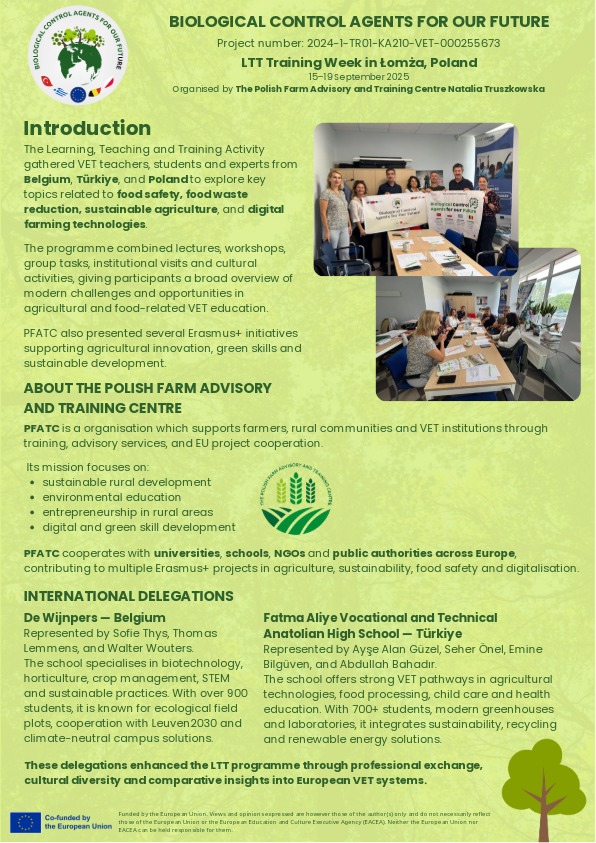
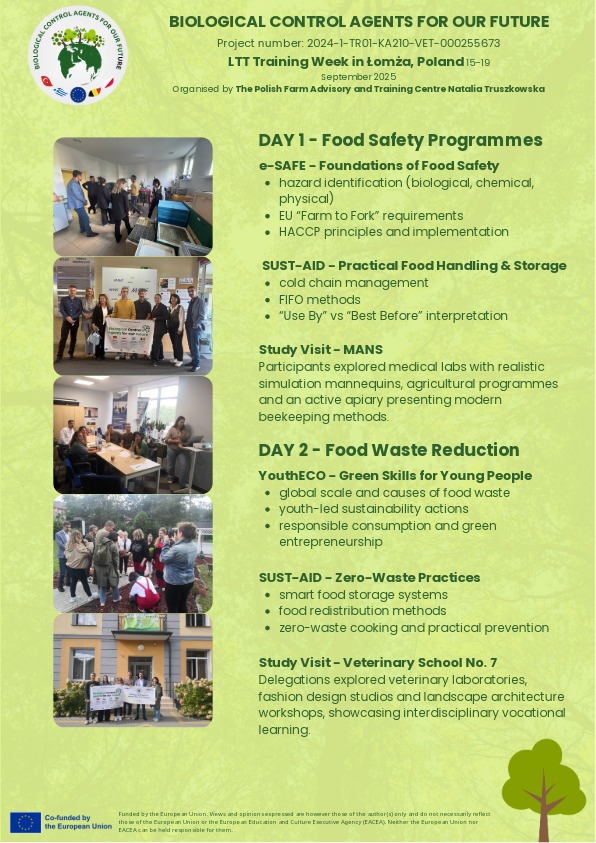
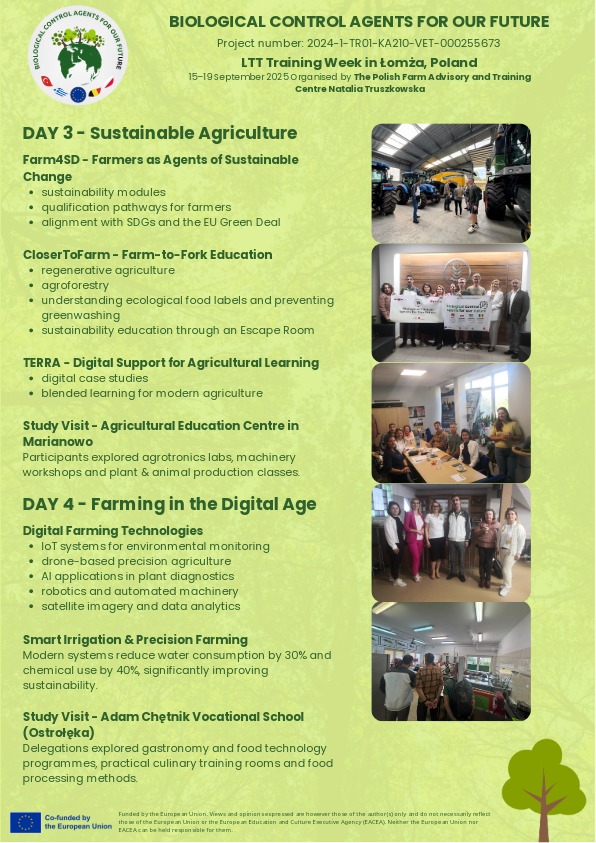
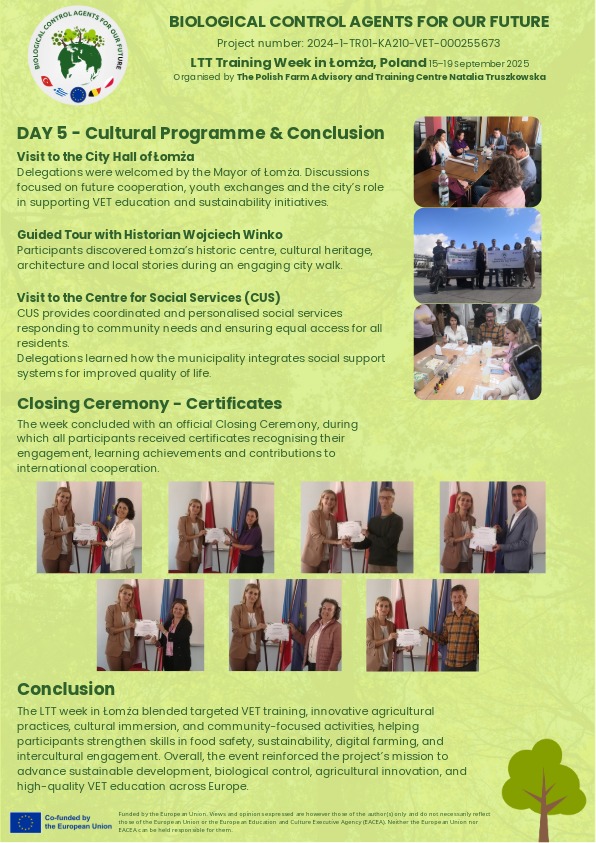
One of the key project activities took place in Łomża, Poland, from 15 to 19 September 2025, hosted by The Polish Farm Advisory and Training Centre. During this international training week, PFA welcomed seven vocational education teachers – four participants from Türkiye and three participants from Belgium. The programme focused on food safety, food waste reduction, sustainable agriculture, digital farming solutions, and the development of digital competences among VET educators. Participants attended workshops, exchanged experiences, and took part in study visits to educational institutions and local stakeholders in the Łomża region.
The training programme included visits to the International Academy of Applied Sciences in Łomża (MANS), the Agricultural Education Centre School Complex in Marianowo, vocational education institutions, and local authorities. These activities provided participants with valuable insights into modern agricultural education, sustainable farming practices, and innovative approaches to vocational training.
The project has also contributed to strengthening international cooperation between vocational education providers and agricultural organisations. By sharing experiences from different countries and learning from successful examples of biological control and sustainable agriculture, the partners have worked together to promote greener and more resilient agricultural systems.
As the project approaches its conclusion in June 2026, the consortium is reflecting on the knowledge gained, partnerships established, and practical solutions developed during the 18-month cooperation period. The results of the project will continue to support teachers, students, farmers, and agricultural stakeholders interested in reducing pesticide use and promoting environmentally responsible farming practices.
The Polish Farm Advisory and Training Centre would like to thank all project partners, participants, and local stakeholders who contributed to the success of this initiative. Together, we have taken another step towards a more sustainable and environmentally friendly future for European agriculture.